Friday, December 12, 2008

S.O.S. America : Big Three may get help from Bush Administration, Ponzi revisited

Seems Bush doesn't want to go down as 'Hoover Lite' or 'Hoover Premium Gold.' (However, this weekend, Bush had to duck and cover two incoming size 10s. It's good to be beloved....er, well, not so much.)


The Big Three American automakers (Ford, Chrysler and GM) now have a shot at the $700 Billion promised to Wall Street without strings attached after their $14 Billion bailout plan designed for them was nixed in large part due to Republican Southern Senators - Dick Shelby -Alabama, Bob Corker - Tennessee, Lindsay Graham - South Carolina - taking issue with the UAW's inability for further concessions, specifically, reducing their pay to the levels of foreign car manufacturers not hampered by legacy costs. (And ignoring congressional ineptitude in getting these jokers to make desirable fuel effective vehicles.)


But it seems Wall Street's take on stirrings in the White House about utilizing a 'bridge loan' is more positive (and likely) everyday as the Dow closed up Friday even amidst the revelation of a $50 Billion Ponzi scheme. That's right, $50 Billion.


Bernard L. Madoff Investment Securities, LLC took money from the affluent and older investor class and gave to whomever wasn't them (like himself.) Somehow he was able to lose $50 Billion in investor money in a supposely legit stock trading. As former chairman of NASDAQ stock market, Madoff's reputation was spotless, but he'll go down as a close kissing relative of Charles K. Ponzi, who prior to the Great Depression used a pyramid scheme of receiving cash to pay other investors back double in 90 days. As long as more people contributed to pay the oldest investors in the scheme, the growing debts could be outran (for a while), though Ponzi was skimming money without much regard throughout.

From Rueters:
Madoff told senior employees of his firm on Wednesday that "it's all just one
big lie" and that it was "basically, a giant Ponzi scheme," with estimated
investor losses of about $50 billion, according to the U.S. Attorney's criminal
complaint against him.


Wow. It is good to be so flippant. Hope he likes prison. It sucks there.

Monday, December 8, 2008

The Last Lecture: A Lifetime Philosophy, VR Future

I just watched last night on public television 'The Last Lecture' by Carnegie Mellon professor Randy Pausch (1940-2008). It was a bit different than I expected. It gave me good enough reason to think to write this post.

Besides giving a stirring overview of what it is to achieve your dreams, I think it was as apt that I finally sat in on a lecture that actually was given by a caring professor. The lessons we were suppose to learn, and the realness of the man, came through in that a presentation. Probably why it got so much attention in a time where attention is misplaced.

Given his passing, and the work in virtual reality he did, along with many, many others he discussed humbly, the world did indeed become a less tolerable place. Now, I can here some say, "did his lecture mean that much (to you)?"

It meant that my usual scattered brain attention of watching a TV show, football game and other secondary tasks were put on hiatus on a Sunday night. That he intrigued me - even knowing I had heard of this story last year, as he sat down with Diane Sawyer, et. al. and discussed what he was doing leading up to his departure from this pebble called Earth. His work in Virtual Reality, while impressive, was not the reason for the interest. His path to a career in that field, his own learning and teaching methods, while important, were very tangential to the conversation he had with Carnegie Mellon staff, friends, colleagues and guests.

Randy Pausch's Last Lecture


In the grander scheme, his life lives on through his connections and work done on Alice - a teaching aid in the VR world. From Alice:
"Alice is an innovative 3D programming environment that makes it easy to create
an animation for telling a story, playing an interactive game, or a video to
share on the web. Alice is a freely available teaching tool designed to be a
student's first exposure to object-oriented programming. It allows students to
learn fundamental programming concepts in the context of creating animated
movies and simple video games. In Alice, 3-D objects (e.g., people, animals, and
vehicles) populate a virtual world and students create a program to animate the
objects."


What I think would be different and unique would to insert Randy's Last Lecture & Life Outlook into a VR program that teaches at a higher level. I think many students would gain a better relationship to their professors if somehow the experiences, teachings, lessons and philosophies of Pausch's years were embedded into a VR program. It is possible...Randy would tell you that.

Saturday, November 29, 2008

A Star Trek: A New Frontier on the horizon

I just saw the new Star Trek trailer (yeah, I know its old news - November 18th) and I am thrilled to say it looks, and sounds, like a winner. The version begins at the most appropriate time - from their youth - and with the wild days of the early space conquests and battles.

Director J.J. Abrams takes over this incarnation of the 11th movie in the historic franchise. While using the Star Wars formula, going back in time to fill in the details (and make more Hollywood cash), this looks more visually stunning (as well it should) and with a wild streak that may turn this character line into a 3-5 movie arch.


Zachary Quinto (Heroes' Gabriel) plays Spock and looks very much like Mr. Nemoy's younger self. But it also seems this Spock will be an action-filled role, with a maturing Vulcan that we can find appealing on many, many levels.

Zoƫ Saldana (Drumline beauty and Ashton Kucher's girl in Guess Who with the late Bernie Mac) plays Uhura and will definitely spice up the role as a sexy lady on the set...(the trailer gives you a peak of that.)


For James T. Kirk, a relative newcomer, Chris Pine, may be the wildcard, though his credentials on an array of differing projects gives one hope that he can be many faces on a classic character.


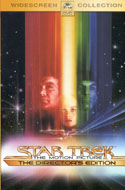
To the side, I grew up a Star Trek fanatic. The original movie with V-ger (Voyager, that now fabled satellite the U.S.A. sent up, as the quest), Star Trek IV: The Voyage Home with the call of the whales needed to save Earth. (Not necessarily considered a very good movie, but it had its moments, like Mr. Scott talking to the computer, and then having to type really fast to come up with the formula for clear plexiglass made out of titanium or some such item.)
It is my hope that all Star Treks will turn out well. We need a new frontier to roam in these unsettling times.

Saturday, November 22, 2008

Ahead of the Curve: Harvard Business School Book mixes with our government’s recent history

I just finished up Ahead of the Curve: Two Years at Harvard Business School by Philip Delves Broughton, a memoir about his recent experience as a graduate student at Harvard Business School, class of 2006. Considered by most as the pinnacle school to receive that prestigious MBA at, Broughton’s story (and the title aptly reflects) on what we should be considering during these difficult times, and on the people who make these decisions.
As a first aside, President George W. Bush (’75) and Treasury Secretary Henry Paulson graduated from Harvard Business. President-elect Barack Obama received his Juris Doctorate from Harvard. Michael Bloomberg, New York City mayor, amongst other things, is a MBA from Harvard. The always quick-to-be-proud of his business acumen, ex-presidential candidate, Mitt Romney, did his work at the Crimson. And today, on the 45th anniversary of his assassination, it should be noted Kennedy graduated from Harvard (cum laude) in 1940, majoring in government. (Thus the Kennedy School of Government.)

So indeed, being a Harvard grad has its potential perks and peaks of power.

Englishman Broughton wrote for a living before stepping into the hallowed foray that is Harvard. As a neophyte to the world of banking, finance, hedge funds and leverage buyouts, he got a crash course in what is the terminology, psychology and manipulations of business numbers, and where it would lead him even before he got started on his two-year trek. As he soon learned, there are no clear answers; just measurements of risk and reward, possibilities defined better, and the balance of what is important to know in business, and in life.

Relating to current financial malaise, a passage from the Ahead of the Curve:
“…I once asked a hedge fund manager in New York about the reckless way credit
was sold to people who could ill afford it. I said they would be ruined. They
would lose their homes and their possessions. Where were the checks on all of
this? What would happen to all these firms lending like crazy when people
stopped paying back their loans? The hedge fund manager looked at me like I was
a madman and said, ‘It’s just economic.’ He meant that over time these borrowers
would learn their lesson. The bankrupted lenders would be bought cheaply by
other investors and turned around. The economic wheel would keep turning, no
matter how many lives had been crushed against it…” (pgs. 232-233)

As we have seen with the demise of Lehman Brothers, Bear Stearnes, WaMu, IndyMac and others likely in the queue (GM, Chrysler, Lear), the economic wheel is spinning quite well as it has indeed crushed retirement funds, and stocks and put people out of work in droves. (Citigroup announcing 50,000+ in job cuts in one week.)

Our current leader, George W. Bush, seems to have adopted a technique not-as-yet-perfected when he attended Harvard, but discussed in Ahead of the Curve, the levering up through debt. This preferred technique, of financing a buyout mainly through debt, thus recording interest paid as an expense (on that debt), produces more return on equity, to equity stakeholders, thus making them extremely happy. It works if you produce a profit, can generate the cash to pay the interest payments, and can keep other expenses down, preferably through frugality to all other concerns. At some point, you take the enterprise public again with all the miscellaneous expenses cut, but likely only a real benefit to the LBO starters of the once-fat company. The actual company, the workers, are unlikely to have received any benefits.

(2nd aside) How this relates to our current government: During the Bush administration, we have ‘levered up’ the balance sheet of the United States. Taking on more debt, trying (but not succeeding) to trim other programs (those nasty entitlements) while keeping taxes on those multi-millionaires low, even giving a tax holiday to them for a decade. The low-interest rates that spurred out-of-control lending to the non-financially savvy, and the opportunists, that both got caught in the wheels of sub-prime and housing market free falls, has loaded up more debt on the U.S. Treasury balance sheet. We continue to make our interest payments on a $10,000,000,000,000 national debt, of at least $500,000,000,000. But when do we run out of fiat money? (At least if you don’t print and print, devaluing our currency to the point of worthlessness.)

But as we’ve also seen, the entities under the auspices of too much leverage have indeed failed when the cash flows stopped to these many, many banks, insurance companies, manufacturers, retailers, and now, oil entities. The deflation of the value of things is reminiscent of the Great Depression.

We are now Behind the Eight Ball: What Harvard Business School Did Not Teach President Bush.

With a new President, Obama will have to get well ahead of the curve in order to stave off the impending doomsday scenario discuss on more than one occasion here, and now, at many other media outlets.

As Broughton also learned, business is not solely the most important entity – as ex-CEO of GE Jack Welch had surmised, quite smugly – as the government too, has its place. For one, without a government in operation, a business cannot protect its interest via laws or the enforcement of contracts. (A business would have to act as a thug to accomplish contract enforcement. Essentially, become a government entity with enforcers and judges of people’s misdeeds.)
The argument made by Welch, that government generates no revenues, and business generates all the money, so we can ignore governance, leaves aside that a symbiotic relationship has always existed. Businesses can exist without government, but only for so long as people ascribe to obeying business edicts. Otherwise, chaos and revolt and failure soon comes. Governments can exist only if people are willing, and led to accept its rules, and abide under its control. And provides some benefit, else why have it. Neither operates in a vacuum.

The book presents Broughton engrossed in the whys of how he decided on Harvard B-School, only to not go immediately from there to a big corporate job, either as an marketing/product manager at Google, a hedge fund operator at Bain, an overworked, type-A financier on The Street, or a start-up city controller as he envisioned in one entrepreneurial leap-of-faith posited. Mr. Broughton’s book maybe a business school companion volume of One L by Scott Turow, the exploration of what it is to become a legal mind and those ramifications, but it truly reflects, that writers, are what they are: able to mirror, emote, characterize, judge and divine truth when at their best.

That somewhere on the curve, there is a path to another road, with another curve to come out ahead on.

Saturday, October 25, 2008

Overnight Idea: The Virtual and Personal MBA

In thinking about what would be a really different and challenging thought, I came to this idea: Design a MBA program around internet searched materials, library books and course materials bought on the cheap or obtained for free. Now, (I know) this seems reaching into an area that is all ready done well enough to turn out so many competent and creative souls. I mean, look at Wall Street and all their recent successes?

To me this will a be a project of compiling data, doing the actual course work discovered at MIT Free Online Courses, incorporating known models at Harvard, Princeton University Economics, Columbia, Stanford, Michigan and Northwestern resources, while adding in the latest business thoughts, from entreprenuerial to regulatory practices.

A music interlude: Johnny Cash's I Walk The Line


By no means is this going to be groundbreaking or money making. It's a desire to learn and study in depth what makes all these $100,000 a year people (well, more in NYC, less, in Midwest fly-over) include oddities and books that are classic, and others, that teach a different mantra, that isn't in Milton Friedman's wettest dreams.

I wanted to take the GMAT years ago, back in 1998-99. Studied, bought the Princeton Review book, etc. Got sidetracked and wound up taking the LSAT. Scanner at heart and soul.

So, this will be a new project with a twist or two likely. I like to incorporate information into a model of how something works. Which is what Business is: a model of what works and what doesn't.

More interesting is to discover how Economics, Business, Law and Public Policy work (or don't work) together.

I figure it will take 2-3 years of reading, writing, researching and designing the course work. With plenty I won't learn or know, but plenty that will enlighten me to the history and evolution of what a true MBA graduate should know.

Example: Jim Kramer's Warning in October 2008 about Stock Market


I will post my work: course study, books read or researched, internet articles, business channel stuff, youtube vids, research papers I will write (God willing) and compiled program of PDFs, Powerpoint stuff, Excel spreadsheets, etc. Maybe it will work out well.

There is a few of goals to this: to create both a virtual program and get what others are learning (or mislearning) in their programs. Criticism is welcome - as well as resources that are good to use or available for free. Nearly free is also the goal. Who is getting their education on the cheap in these hard economic times?

I figure if I can put together a comprehensive, intelligent and understandable model for a learning (with the undergrad course stuff included), why does education need to be so expensive?

I'm not selling this idea yet. But it has merit. People need choices that are low cost and digestable in 1 1/2 -2 year window of learning. Also, the path to enlightenment is usually a personal experience more than a guided tour by people with their own motivations and shortsightness built in.

I hope that in the end I can be more informed while informing others in the process.

My 1st semester will start in January 2009. Till then, I am compiling the nuts and bolts of what I need to include and discover during the next 2 years.

(So, that Perfect Storm post will take a backseat.)


Final Music: Johnny Cash's God's Gonna Cut You Down